Zero Trust Explained Simply
A practical introduction to why modern enterprises should verify every user, device and request before granting access.
7 July 2026 • 5 min read

Traditional security was built around a trusted internal network. Zero Trust starts from a different assumption: access should never be trusted automatically.
Instead, every request is evaluated based on factors such as identity, device, location, access rights and context. The goal is simple: give the right people the right access to the right resources, while reducing unnecessary exposure.
Why Zero Trust Matters
The Security Perimeter Has Changed

Hybrid & Remote Access
Users increasingly connect from outside traditional corporate networks.

Cloud Applications
Business data and services may operate across multiple environments.

Third-Party Access
Partners and external services often require controlled access to enterprise resources.
Multiple Devices
Access may come from corporate, mobile and other authorised devices.
The Zero Trust Mindset
Never Trust Automatically. Always Verify.
Employees, customers, partners, applications and cloud services increasingly connect from different locations and devices. The traditional idea of protecting everything behind one corporate network is no longer enough.
Zero Trust moves security closer to every access decision, helping organizations protect resources wherever users and systems connect from.

Zero Trust In Practice
Access Becomes A Continuous Decision
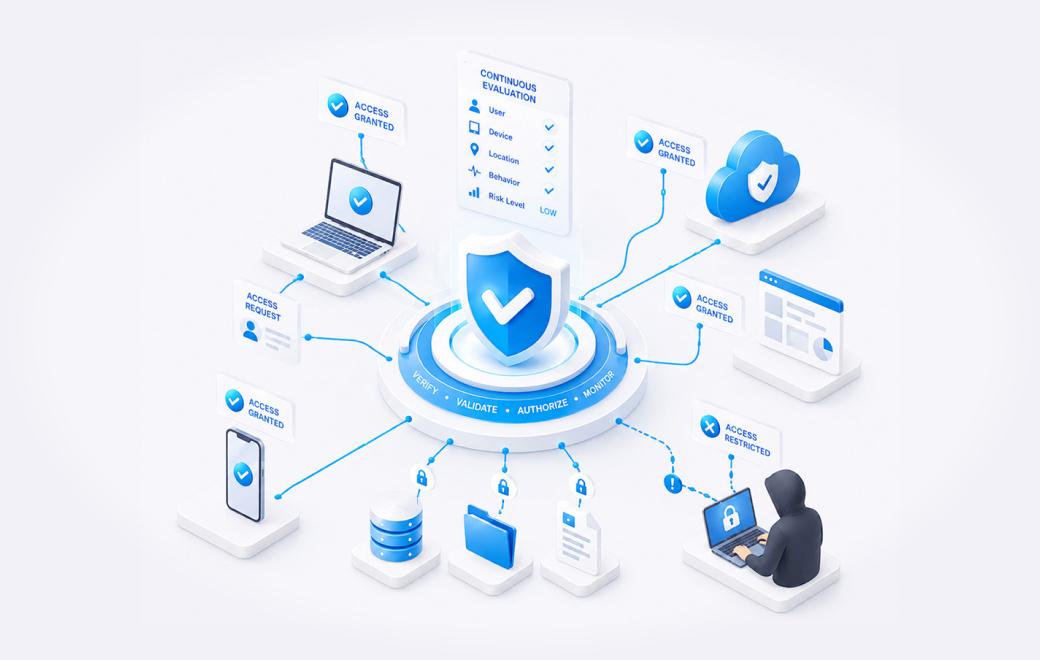
Under a Zero Trust approach, authentication is only the beginning. Access can be evaluated continuously using identity, device posture, permissions and contextual information.
If risk changes, access policies can respond accordingly.
- Confirm Identity — Authenticate users and services before granting access.
- Check Device & Context — Consider device security, location and other relevant signals.
- Apply Appropriate Access — Grant only the permissions required for the task.
- Monitor Activity — Continue evaluating behaviour after access is granted.
Zero Trust ≠ Zero Access
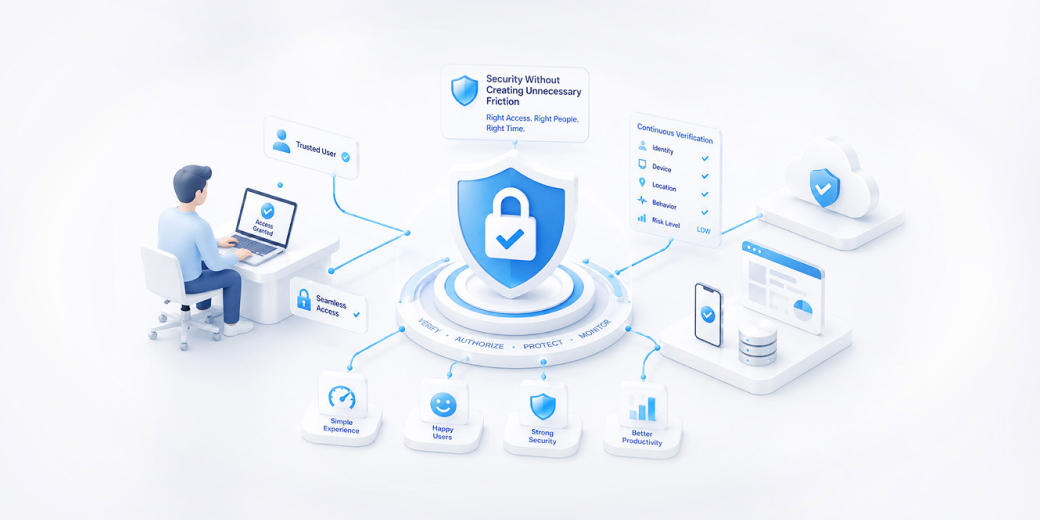
Security Without Creating Unnecessary Friction
Zero Trust is not about blocking everything or repeatedly challenging users without reason. A well-designed approach combines stronger security with practical access experiences.
- Design security around real user and operational needs
- Automate verification where appropriate
- Apply controls according to risk
- Reduce unnecessary access without disrupting legitimate work

Zero Trust is not one product or technology. It is a security approach built around continuously verifying access and limiting unnecessary trust.