5 Signs Your Business Needs Workflow Automation
How to recognise when manual processes are slowing your teams down and where automation can make a difference.
10 July 2026 • 5 min read

Manual processes often work well at first. The problem begins when the business grows, transactions increase and simple workflows become harder to manage.
Workflow automation helps organisations reduce repetitive work, improve consistency and connect processes across teams and systems. The first step is recognising where manual effort is creating unnecessary friction.
Spotting The Warning Signs
When Manual Work Starts Getting In The Way

Teams Repeat The Same Tasks
Employees spend significant time copying information, updating records, preparing routine documents or performing the same administrative actions.

Processes Keep Changing Hands
Requests move between people, departments, emails and spreadsheets, making it difficult to know who should act next.

Nobody Sees The Full Picture
Teams rely on manual updates to understand progress, making delays, bottlenecks and outstanding actions harder to identify.
Five Signs To Watch
1. Repetitive Tasks Consume Too Much Time
When employees repeatedly perform predictable, rules-based tasks, valuable time is spent maintaining the process rather than contributing to higher-value work.
Typical examples include:
- Re-entering information between systems
- Sending routine notifications and reminders
- Preparing recurring reports
- Updating records and statuses manually

Process Complexity
2. Approvals And Handoffs Create Delays
A process may involve several teams before it can be completed. When every handoff depends on an email, message or manual follow-up, small delays quickly accumulate.
Automation can route requests to the right person, trigger notifications and maintain a visible record of each step.
- Trigger approval workflows
- Route requests automatically
- Notify the next responsible person
- Track progress from start to completion

Information Flow
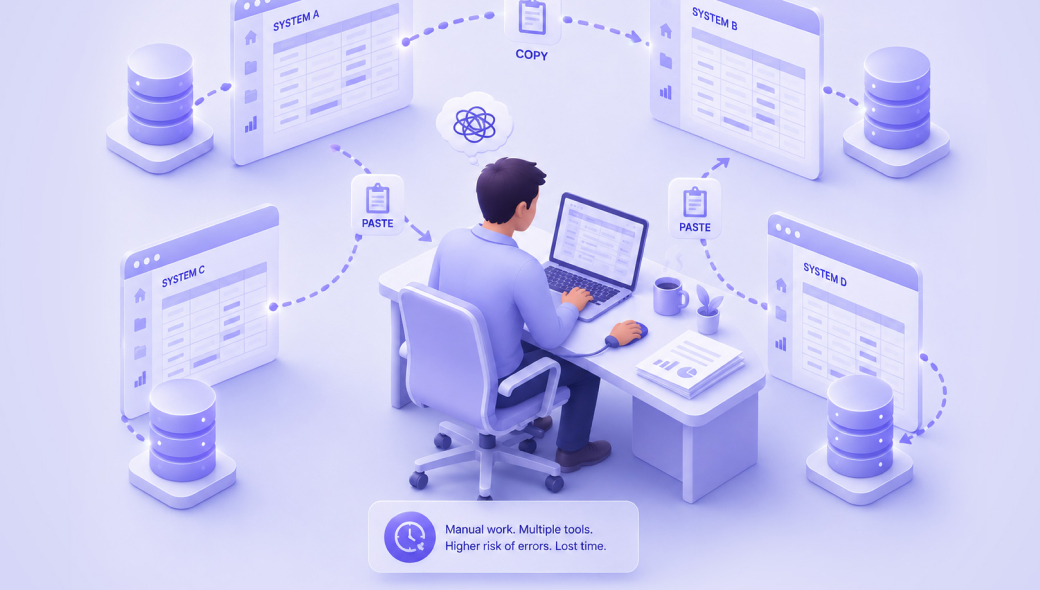
3. Teams Are Copying Data Between Systems
When information must be manually transferred between applications, spreadsheets or departments, organizations introduce unnecessary work and increase the possibility of errors.
Workflow automation can connect systems and allow information to move between processes with less manual intervention.
- Reduce duplicate data entry
- Connect existing business systems
- Keep information more consistent
- Reduce manual errors
Operational Visibility
4. It Is Difficult To Know What Is Happening
If teams need to chase updates, search emails or maintain separate spreadsheets simply to understand the status of work, the process lacks visibility.
Well-designed digital workflows create clearer ownership and make progress easier to monitor.
- See current workflow status
- Identify pending actions
- Surface bottlenecks earlier
- Improve accountability across teams

Scaling Operations
5. More Business Means More Administrative Work
Growth should not require administrative effort to increase at exactly the same rate.
When every new customer, transaction or request creates another set of manual tasks, the underlying process may no longer be scalable.
Automation allows organizations to handle increasing volumes while keeping processes structured and consistent.
- Handle higher transaction volumes
- Standardize repeatable processes
- Reduce dependency on manual coordination
- Allow teams to focus on higher-value work


Automation does not begin with automating everything. Start with the repetitive, high-volume processes creating the most friction, then expand from there.